France is one of Europe's largest markets for prefab residential construction. Since January 2022, the RE 2020 regulation has made timber-based prefab the default choice for new homes: concrete structures face a carbon penalty that makes them economically unviable for most residential projects. German manufacturers — led by Hanse Haus, WeberHaus, and Baufritz — have been active in France for decades and hold significant market share alongside French players like Natilia and Maison Compacte.
If you're comparing France with other European markets, see our guides for prefab homes in Germany and the best prefab homes in Europe. For Spanish buyers, our Spanish price guide is the starting point.
Featured prefab models available in France
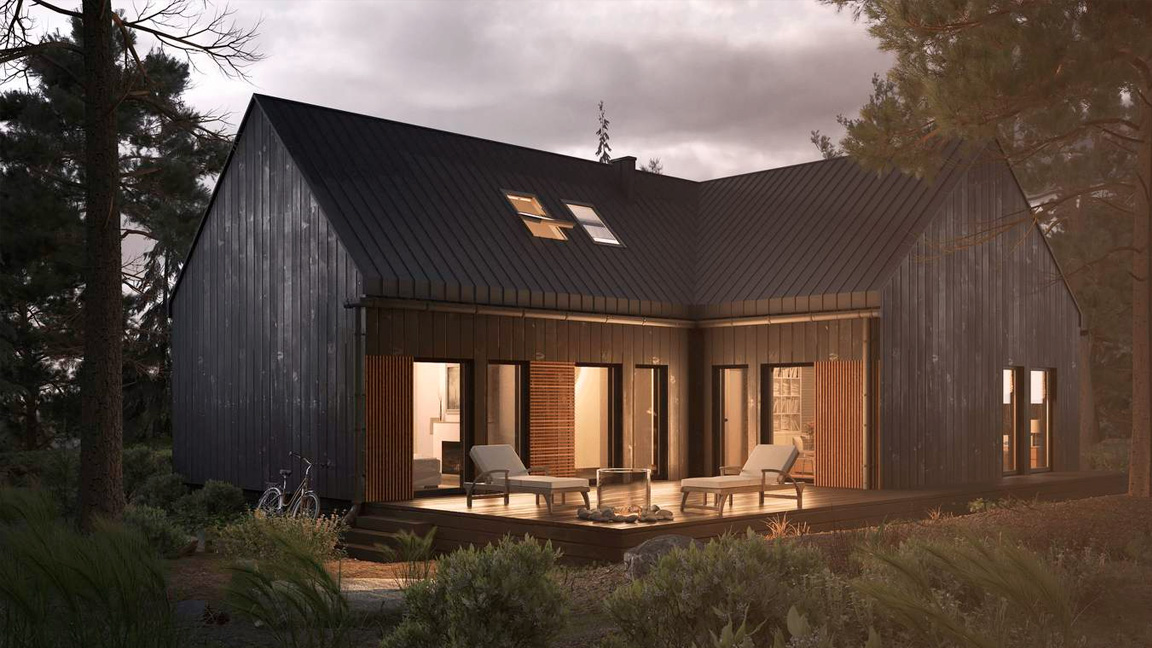
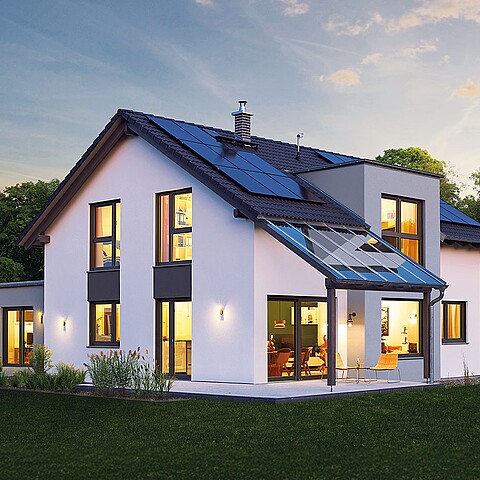
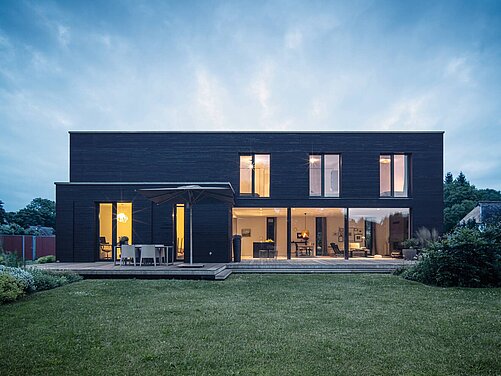
See all Eupro models → · See all Hanse Haus models → · See all Weberhaus models → · See all Maison Compacte models →
RE 2020: Why it made prefab the default choice in France
The Réglementation Environnementale 2020 (RE 2020), mandatory for all new residential construction in France since January 2022, is the strictest building energy standard in the European Union. It has two key requirements that directly benefit prefab over traditional construction:
- Near-zero energy consumption (BBCe) — All new homes must achieve a primary energy consumption below 100 kWh/m²/year. This is achievable with good traditional construction, but is the baseline for well-designed timber frame without extra effort.
- Carbon footprint limit (IC construction) — RE 2020 caps the embodied carbon of construction materials. Concrete-heavy structures struggle to meet this threshold, while timber frame and CLT comfortably comply — concrete's carbon emissions during manufacture push traditional builds close to the limit.
The practical effect: timber frame prefab is now the path of least resistance for French builders. Every major German prefab manufacturer in France (Hanse Haus, WeberHaus, Baufritz) had already been building to Passivhaus and near-Passivhaus standards for decades — RE 2020 simply validated their approach.
Since RE 2020 came into force, the share of timber frame construction in new French homes increased from 12% in 2021 to over 22% in 2024. Prefab timber frame manufacturers have seen order backlogs extend to 12–18 months in some regions.
Prefab home prices in France (2025)
| Manufacturer | Country | System | Starting price | Delivery time |
|---|---|---|---|---|
| Maison Compacte | France | Timber frame | €90,000 | 4 months |
| Eupro | France | Hybrid | €130,000 | 5 months |
| Natilia | France | Timber frame | €95,000 | 5 months |
| Scandi Houses | Germany | Timber frame | €140,000 | 5 months |
| Hanse Haus | Germany | Timber frame | €160,000 | 5 months |
| WeberHaus | Germany | Timber frame | €280,000 | 6 months |
| Baufritz | Germany | Timber frame | €350,000 | 7 months |
| Kontio | Finland | Log / Timber | €280,000 | 6 months |
| Honka | Finland | Log / Timber | €300,000 | 7 months |
All prices are turnkey and exclude land. French notary fees (7–8% for land purchase) and permis de construire taxes are additional. The total land + home budget for a 120 m² home in rural France is typically €250,000–€450,000 including all costs.
Top prefab manufacturers active in France
French manufacturers
- Natilia — Nantes-based timber frame builder in the mid-range segment. From €95,000, with a typical 5-month delivery.
- Casa Plus — Mid-range modular specialists. Consistent product, nationwide delivery. From around €110,000.
- Maison Compacte (Paris) — Compact timber homes for smaller plots. From €90,000. Popular in peri-urban areas around Paris and Lyon where plot size is limited.
- Eupro — Hybrid systems combining timber frame and concrete elements. From €130,000. Good track record in south-west France.
German manufacturers with strong French presence
- Hanse Haus (Oberleichtersbach) — Over 12,000 homes built. Their turnkey timber frame product is among the best value in France for the mid-range segment. From €160,000 for 100 m².
- WeberHaus (Rheinau-Linx, border with France) — Their factory is just across the Rhine from Alsace. Strong in eastern France. Premium product with high customisation. From €280,000.
- Baufritz (Erkheim) — Ecological premium segment. 100% natural materials philosophy. From €350,000. Strong in Ile-de-France and the Alps.
- Scandi Houses (Hamburg) — Scandinavian-inspired timber frame. From €140,000. Growing presence in northern and western France.
Nordic manufacturers
- Kontio (Finland) — Log homes and timber construction. From €280,000. Strong in Alpine regions and Brittany.
- Honka (Finland) — Premium log homes. From €300,000. Known for the distinctive Scandinavian aesthetic and air quality inside log structures.
Browse all manufacturers active in France
Filter by system, price range and delivery time in the full directory.
View France directory →How to buy a prefab home in France: key steps
- Land purchase — Buy land classified as constructible (zone U or AU in the PLU — Plan Local d'Urbanisme). Notary fees: 7–8% of land price. Land registry check (servitude) is mandatory.
- Manufacturer selection and design — Choose a manufacturer and work with their design team. All French manufacturers now design to RE 2020 as standard.
- Permis de construire — Building permit filed at the local mairie. Processing: 2–3 months rural, 3–6 months urban. The manufacturer's team handles the application.
- Contrat de Construction de Maison Individuelle (CCMI) — The standard legal framework for building a new home in France. It fixes the price, timeline, and guarantees. This contract is mandatory for consumer-facing projects and protects the buyer.
- Financing — Mortgage (prêt immobilier) or Prêt à Taux Zéro (PTZ) for first-time buyers. Banks release funds in tranches tied to construction milestones.
- Construction and delivery — Factory manufacturing runs in parallel with permitting. Typical timeline from signed contract to keys: 5–9 months.
- Déclaration d'achèvement des travaux (DAACT) — Mandatory declaration at the mairie within 90 days of completing construction.
In France, any company building a new home for an individual buyer must use the Contrat de Construction de Maison Individuelle (CCMI). This contract guarantees the fixed price, the delivery date, and the 10-year structural warranty (garantie décennale). If a manufacturer refuses to use a CCMI and proposes a simple "contrat d'entreprise" instead, walk away — you lose all legal protections.
Best regions in France for prefab construction
- Grand Est (Alsace) — Proximity to German manufacturers (WeberHaus factory is right on the border). Strong tradition of high-quality timber construction. Good plot availability outside Strasbourg.
- Nouvelle-Aquitaine (Bordeaux, Dordogne) — Active market for rural and secondary residences. Eupro and Natilia have strong regional presence. Mild climate reduces heating/cooling costs.
- Bretagne (Brittany) — Atlantic climate perfectly suited for well-insulated timber frame. Growing demand driven by Parisian buyers seeking rural lifestyle. Plots more affordable than Ile-de-France.
- Auvergne-Rhône-Alpes (Lyon, Grenoble) — Cold winters justify premium insulation. CLT and Passivhaus projects very active here. Baufritz and Kontio particularly strong.
- Occitanie (Toulouse, Montpellier) — Mediterranean climate. RE 2020 summer comfort requirements drive demand for well-shaded, high-mass timber frame. Growing market.
Frequently Asked Questions
A prefab home in France costs between €90,000 and €450,000 depending on size, system and manufacturer. For a standard 100 m² timber frame, expect €110,000–€180,000 turnkey from French manufacturers. German manufacturers charge €160,000–€350,000 for equivalent sizes. Total cost with land in rural areas: €250,000–€450,000.
RE 2020 is the French building energy code mandatory since January 2022. It requires near-zero energy consumption and limits embodied carbon. Concrete structures struggle to meet the carbon limit, while timber frame and CLT comply naturally. RE 2020 has made prefab timber frame the default choice for new French homes.
The main French prefab manufacturers are Natilia (timber frame, Nantes), Casa Plus, Maison Compacte, and Eupro. German manufacturers (Hanse Haus, WeberHaus, Baufritz) are very active in France. Nordic companies (Kontio, Honka) serve the luxury segment.
Yes. A permis de construire is required for any new residential construction over 20 m². Processing takes 2–3 months in rural areas, 3–6 months in urban communes. The manufacturer's team typically handles the application as part of the turnkey service.
Yes. French banks finance prefab homes under the same conditions as traditional construction. The Prêt à Taux Zéro (PTZ) is available for first-time buyers. The home must meet RE 2020 requirements. Most major French banks have experience with prefab autopromotion financing.
Explore Europe's largest prefab home directory
300+ manufacturers across Spain, France, Germany and beyond — with real prices and delivery times.
Browse all manufacturers →